
In this Art, Health and History post, Steph looks at the darker undertones of William Hogarth’s prints, and what they and other artworks can tell us about a new? disease that ravaged early modern Europe.
For more information on the Art, Health and History project, click here.
Our current Prints of Darkness exhibition displays all sorts of sinister insights into human nature. Hogarth’s prints are full of satire and show people from all walks of life behaving badly, many of whom display signs of a disease he used to show some characters in his prints were bad people or were becoming immoral. Syphilis is a disease which is unique to humans. Where did this terrifying disease which plagued early modern Europe come from and why was it so virulent in the fifteenth and sixteenth centuries? What did people think when it made its first appearance?

The chief way this disease is spread and the disfiguring effects it could sometimes have on its victims meant that those who were afflicted could have their reputation damaged. The bacterium which causes the disease, Treponema palladum, was not identified until 1905 an antibiotics (discovered later) as a treatment, such as Penicillin, were not made in large numbers until the 1940s. Throughout history it had been suggested that syphilis has infected many interesting people; Al Capone, Cesare Borgia, Charles Baudelaire, Edouard Manet, Henri de Toulouse-Lautrec, the Florence Foster Jenkins. Others are speculated to have been affected by syphilis, but its ability to mimic other illnesses can make a diagnosis difficult after someone has been dead for a long time.

There are a number of theories as to the origins of the disease and when it first appeared in Europe. The French invasion of Naples in 1494-5 is has been suggested by some historians as the first appearance of syphilis in Europe. The Columbian theory of the disease claims that the disease was brought back from the New World by Europeans, perhaps by Columbus’ crew first. This theory is thought to potentially hold the most weight in terms of physical evidence via human remains from the island of Hispaniola displaying marks on bones which could have been caused by syphilis, dating back to a period before Europeans arrived there there. The disease can also can a thickening of some bones, which would be very painful. It’s sad to look upon the bones of someone who was suffering from this terrible illness and see what it did to them. A discovery of bones from the Blackfriars monastery in Hull seemed to some to lend support for the Pre-Columbian theory of the disease. This case, which was presented in a documentary, has not been submitted for peer review and it has been suggested that the marks could have been caused by yaws or tuberculosis. The origins of syphilis are still debated today.
Treponema pallidum pertenue, responsible for causing yaws, is in the same family as the bacteria which causes syphilis. Both theories concerning the origins of syphilis have suggested, to some extent, the idea that contact between Europeans and the inhabitants of the New World may have caused the bacteria to change and develop into a more virulent disease. News articles which discuss the origin theories of this disease sometimes look for who might be to ‘blame’ or ‘not to blame’ for the disease, in some ways this is not so different from early modern people who wrote about syphilis. Of course no one is truly to blame for a disease, these things just occur in nature, but the language that we have used and still sometimes use today regarding diseases is often linked to fear and shame.
Naming the Pox
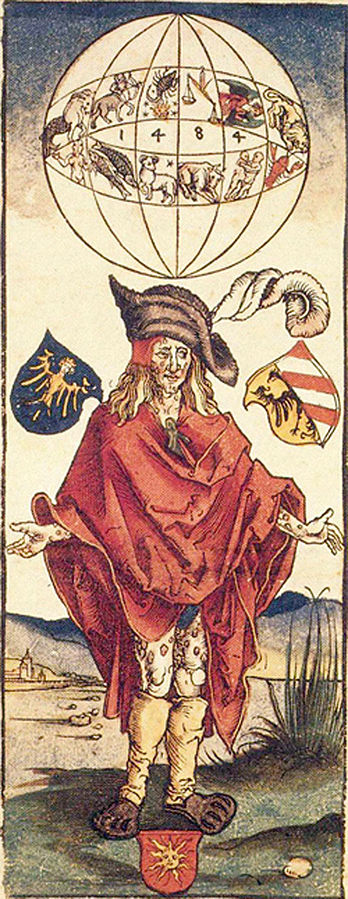
When the French king Charles VIII attacked Naples in 1494, his army was comprised mostly of mercenaries. The French forces were eventually defeated by a ‘Holy League’ of forces recruited by the Holy Roman Emperor Maximillian I, Pope Alexander VI, Venice, Milan and Spain. Alexander Benedetto, a Venetian physician and doctor to Pope Alexander VI, discussed in 1497 how this disease the French forces were afflicted with had not been seen before. Some historians have argued that the seeming virulence of this strain of syphilis was due to multiple diseases acting together.
The Italians dubbed this disease Morbus Gallicus or the French disease. The French called it the Mal de Naples and it’s said they took it back with them to France. As this new (or newly virulent) disease spread across Europe it gained many names; it was known as the German disease, the Polish disease and the Russian disease. These names usually reflected the routes that people thought it had taken into their country. They also, to some extent, initially reflected the attitudes of different nations towards each other at the time, usually in relation to conflict. Xenophobia is no stranger to the history of disease; Jews had been blamed for the bubonic plague outbreak which swept across Europe in the 1340s. They were also blamed by some for the spread of syphilis, which was sometimes likened to leprosy. Although the names given to syphilis were perhaps meant to be insulting, at least by those who first used them, it seems to be largely where the offence ends. I didn’t find any accounts of people having been rounded up and brutalised on account of their nationality specifically with regard to syphilis, and physicians would utilise ideas about treatments originating with physicians in other countries.
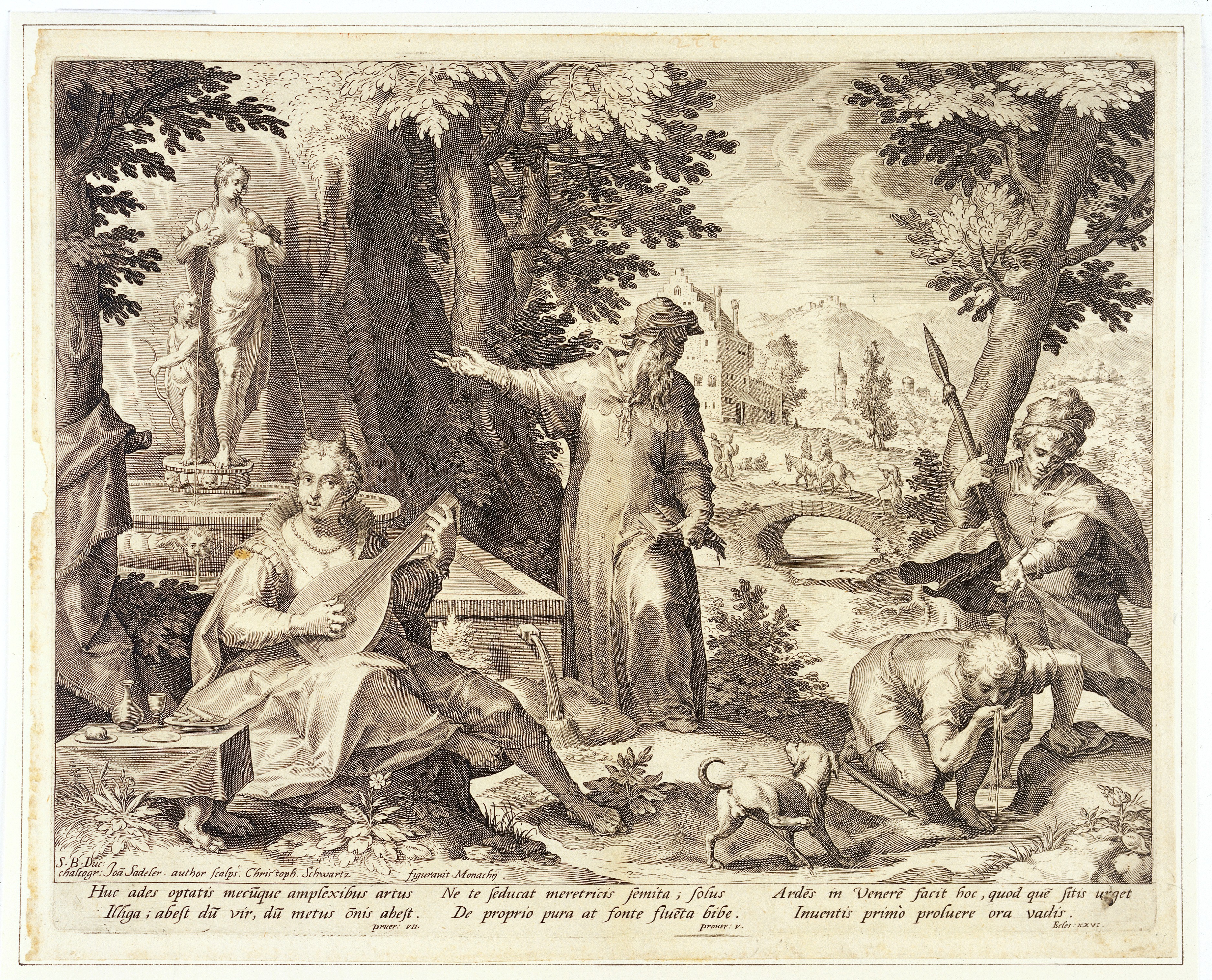
It was a Latin poem published by Girolamo Fracastoro in 1530 which gave us the name ‘syphilis.’ The poem told the story of a shepherd named Syphilus who was punished by Apollo with a terrible disease, which caused him to be shunned. It accurately described the symptoms of syphilis and discussed methods by which one might try to cure themselves. The popularity of the poem meant that some people began to refer to the disease as syphilis, but the name was not very widely used in Britain until the nineteenth century. Fracastoro had a theory about seeds of disease which transmitted disease from person to person and even onto objects. These could be transmitted through the air or, with some diseases, direct contact with a carrier. This is a very impressive forerunner of the germ theory and it has quite rightly earned Fracastoro a place as one of the fathers of modern medicine. He also observed the disease did not seem as vicious as it had in the 1490s. It seemed to him that it no longer killed its victims swiftly.
Names such as ‘the French pox’, sometimes the ‘great pox’ to differentiate it from smallpox, or just ‘the pox’ became the vernacular for the disease in England. Few people called it syphilis early on and those who did were from more educated circles. Daniel Turner, a surgeon and physician writing in the early eighteenth century, is thought to have been the first person to use the term in the English language. Many also used terms such as ‘clap’ for the disease, a term we associate with gonorrhoea today. During the eighteenth century many thought that gonorrhoea and syphilis were the same disease, perhaps because of the decline in the virulence of syphilis over the centuries but also no doubt due to an unfortunate experiment performed by the surgeon John Hunter upon himself. Hunter infected himself with pus from someone suffering from gonorrhoea and later developed symptoms of syphilis, taking that to mean that the two diseases were actually the same.
Resources
https://wellcomecollection.org/works/x4y6qs7s?query=syphilis&page=2
https://wellcomecollection.org/works/m3ttr8jp?query=ulric%20von%20hutten%20syphilis
https://wellcomecollection.org/works/z9nbca2a?query=syphilis&page=2
https://wellcomecollection.org/works/juutsssc?query=durer%20syphilis
https://wellcomecollection.org/works/edzbqu78?query=syphilis%20fracastorius
https://wellcomecollection.org/works/nhjzetht?query=mercury%20pills
https://wellcomecollection.org/works/qw9dd5g5?query=straet%20syphilis
https://wellcomecollection.org/works/p6zhruvz?query=nose%20syphilis
https://wellcomecollection.org/works/cefqer5v?query=%20syphilis&page=2
https://www.ncbi.nlm.nih.gov/pmc/articles/PMC3413456/
https://wellcomelibrary.org/item/b28139938#?c=0&m=0&s=0&cv=12&z=-1.2498%2C-0.0887%2C3.4997%2C1.7731
http://notchesblog.com/2016/03/22/sores-scorn-and-stigma-suffering-syphilis-in-early-modern-germany/ https://www.rijksmuseum.nl/en/rijksstudio/artists/gerard-de-lairesse
http://europepmc.org/backend/ptpmcrender.fcgi?accid=PMC1194440&blobtype=pdf
Peter Lewis Allen, The Wages of Sin: Sex and Disease, Past and Present (London, 2000).
Catherine Arnold, City of Sin: London and Its Vices (London, 2010).
Lawrence I. Conrad, Michael Neve, Vivian Nutton, Roy Porter, Andrew Wear, The Western Medical Tradition 800 BC to AD 1800 (Cambridge, 2003).
Hugh Crone, Paracelsus: The Man Who Defied Medicine (Melbourne, 2004).
Barbara J. Dunlap, ‘The Problem of Syphilitic Children in Eighteenth-Century France and England’, in Linda Evi Merians (ed.), The Secret Malady: Venereal Disease in Eighteenth-century Britain and France (Kentucky, 1996), p. 114- 127.
John Frith, ‘Syphilis- Its Early History and Treatment until Penicillin and the Debate on its Origins’, Journal of Military and Veteran’s Health 20:4
Fred D. Gray, The Tuskegee Syphilis Study: The Real Story and Beyond (Montgomery, 2013).
James H. Jones, Bad Blood: The Tuskegee Syphilis Study (New York, 1993).
Fiona Haslam, From Hogarth to Rowlandson: Medicine in Art in Eighteenth Century Britain: (Liverpool, 1996).
Debora Hayden, Pox: Genius, Madness and the Mysteries of Syphilis (New York, 2003).
N.F. Lowe, ‘The Meaning of Venereal Disease in Hogarth’s Graphic Art’, in Linda Evi Merians (ed.), The Secret Malady: Venereal Disease in Eighteenth-century Britain and France (Kentucky, 1996), pp. 168-182.
Marie E. McAllister, ‘John Burrows and the Vegetable Wars’, in Linda Evi Merians (ed.), The Secret Malady: Venereal Disease in Eighteenth-century Britain and France (Kentucky, 1996), pp. 85-102.
Linda E. Merians, ‘The London Lock Hospital and the Lock Asylum for Women’, in Linda Evi Merians (ed.), The Secret Malady: Venereal Disease in Eighteenth-century Britain and France (Kentucky, 1996), pp. 128-148.
Kathryn Norberg, ‘The Body of the Prostitute: Medieval to Modern’, in Sarah Toulalan and Kate Fisher (eds.), The Routledge History of Sex and the Body: from 1500 to the Present (London, 2013), pp.393-407.
J.D. Oriel, The Scars of Venus: A History of Venereology (London, 1994).
Monika Pietrzak-Franger, Syphilis in Victorian Literature and Culture: Medicine, Knowledge and the Spectacle of Victorian Invisibility (Hamburg, 2017).
Gabriel A. Rieger, Sex and Satiric Tragedy in Early Modern England: Penetrating Wit (Farnham, 2009).
Claudia Stein. Negotiating the French Pox in Early Modern Germany (Warwick, 2009).
Richard M. Swiderski, Quicksilver: A History of the Use, Lore and Effects of Mercury (Jefferson, 2008).
Perry Treadwell, God’s Judgement? Syphilis and AIDS: Comparing the History and Prevention Attempts of Two Epidemics (New York, 2003).
Judith R. Walkowitz, Prostitution and Victorian Society: Women, Class and the State (Cambridge, 2001).
Philip K. Wilson, Surgery, Skin and Syphilis: Daniel Turner’s London (1667-1741), (Amsterdam, 1999).
Philip K. Wilson, ‘Exposing the Secret Disease: Recognising and Treating Syphilis in Daniel Turner’s London’ in Linda Evi Merians (ed.), The Secret Malady: Venereal Disease in Eighteenth-century Britain and France (Kentucky, 1996), pp. 68-84.
 A Place Between The Trees
omg
LikeLike