
This week, Steph continues her look at the Great Pox, and how early modern Europeans tried to come to an understanding of it.
For more information on the Art, Health and History project, click here.
There were various theories in the fifteenth and sixteenth centuries as to what exactly caused syphilis. Some blamed its emergence in Europe on Europeans coming back from the New World, believing that the presence of guaiac in the New World, used in remedies against syphilis, indicated that its origins must lie there. Others looked to ancient sources to prove the existence of this disease in the ancient world. A debate was held in Ferrara in 1497 discussing the origins of syphilis. Those who believed that they could find evidence of syphilis in the ancient world, when faced the problem of the virulence of the disease in the 1490s, had the trouble of explaining why there was such a deadly outbreak occurring. Some believed they could find Biblical evidence for the disease and evidence in texts from ancient Greece. Divine judgement certainly wasn’t out of the question. Early depictions of syphilis, such as one of the first woodcuts produced by Sebastian Brandt to accompany Joseph Grünpeck’s 1496 tract on the ‘French evil’, sometimes depict Mary and a baby Jesus punishing people with syphilis for their immoral behaviour or blessing the afflicted.

Joseph Grünpeck suggested an astrological cause for the disease, as well as divine punishment. He hoped his early works on syphilis would help secure him a position at the court of Maximillian I, who was concerned about this new disease his troops had come into contact with and his own image as a rightful and pious emperor who would defend Christendom from Ottoman threats. Maximilian saw syphilis as a punishment from God and let this be known in his edict concerning blasphemy, which was followed by fining people for lewd behaviour. Grünpeck claimed that a conjunction of Jupiter or Saturn at the sign of Scorpio, followed by a solar eclipse and later a conjunction of Saturn and Mars at the sign of Scorpio was a chief cause of the disease and other unfortunate occurrences. God’s judgement was the first. Grünpeck became Maximillian’s personal secretary and was met with censure from his friends when it became apparent he had contracted the disease. He had to leave his position at court in 1501. He later returned to court, however, seemingly cured; his condition having perhaps entered a latent stage without obvious symptoms. Maximilian’s attitude towards the disease now seemed to be less zealous, perhaps because numerous close members of his court had contracted the pox.
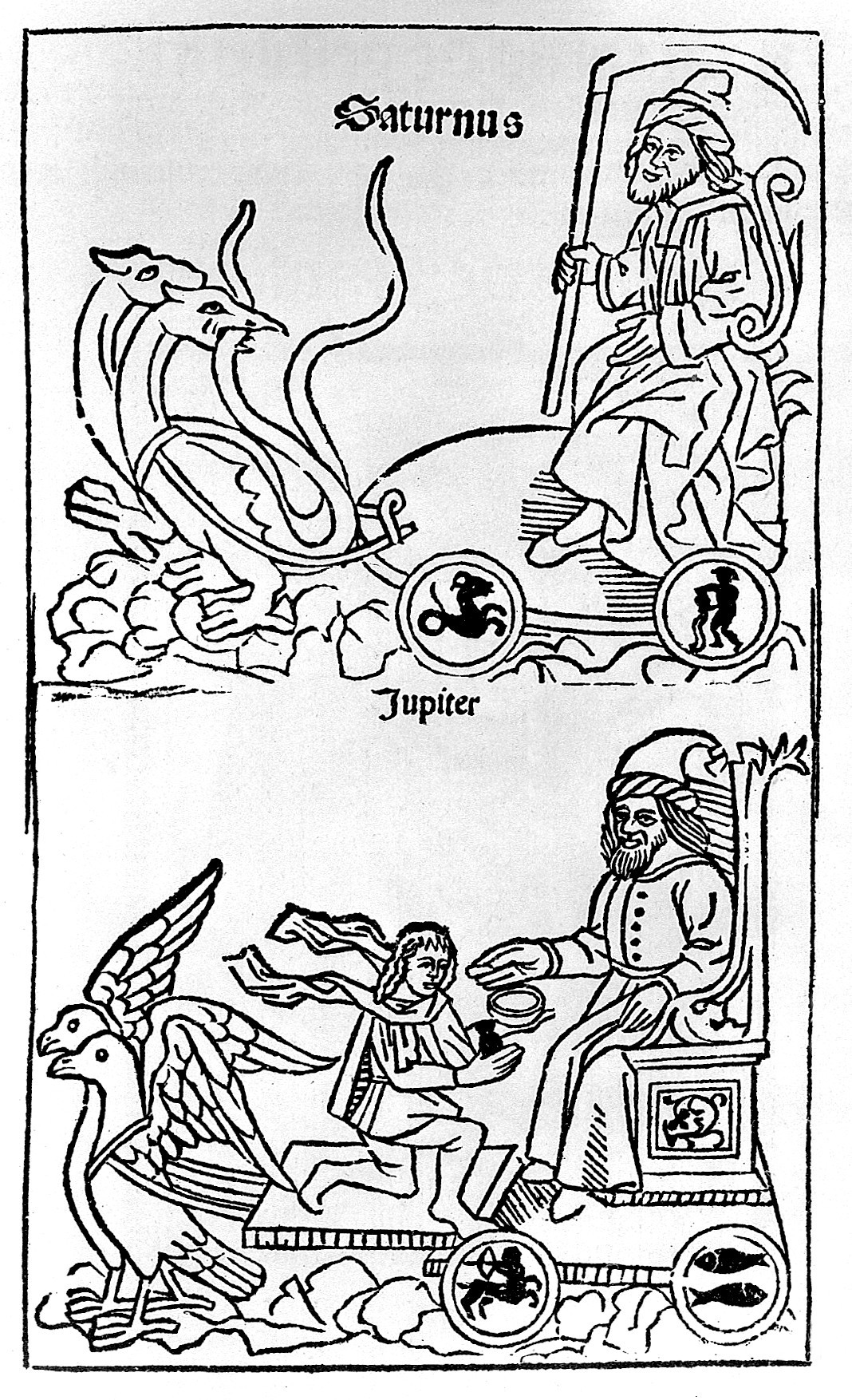
Chief among the theories of disease at the time was the theory of the four humours, which had been inherited from the Greeks and the Romans. This theory stated that the human body was full of four humours; blood, phlegm, black bile and yellow bile, which all had different properties ranging from hot to cold and dry to moist. An imbalance in these humours could cause an illness to occur and treatment was aimed at trying to rid the body of the bad or excess humour and rebalance the humours. Purging and bleeding were standard treatments for many diseases. Remedies for syphilitics involving the application of mercury and the guaiac would often cause patients to sweat and, with the toxicity of mercury, salivate a lot, hopefully helping to expel the disease.
Treating the Pox
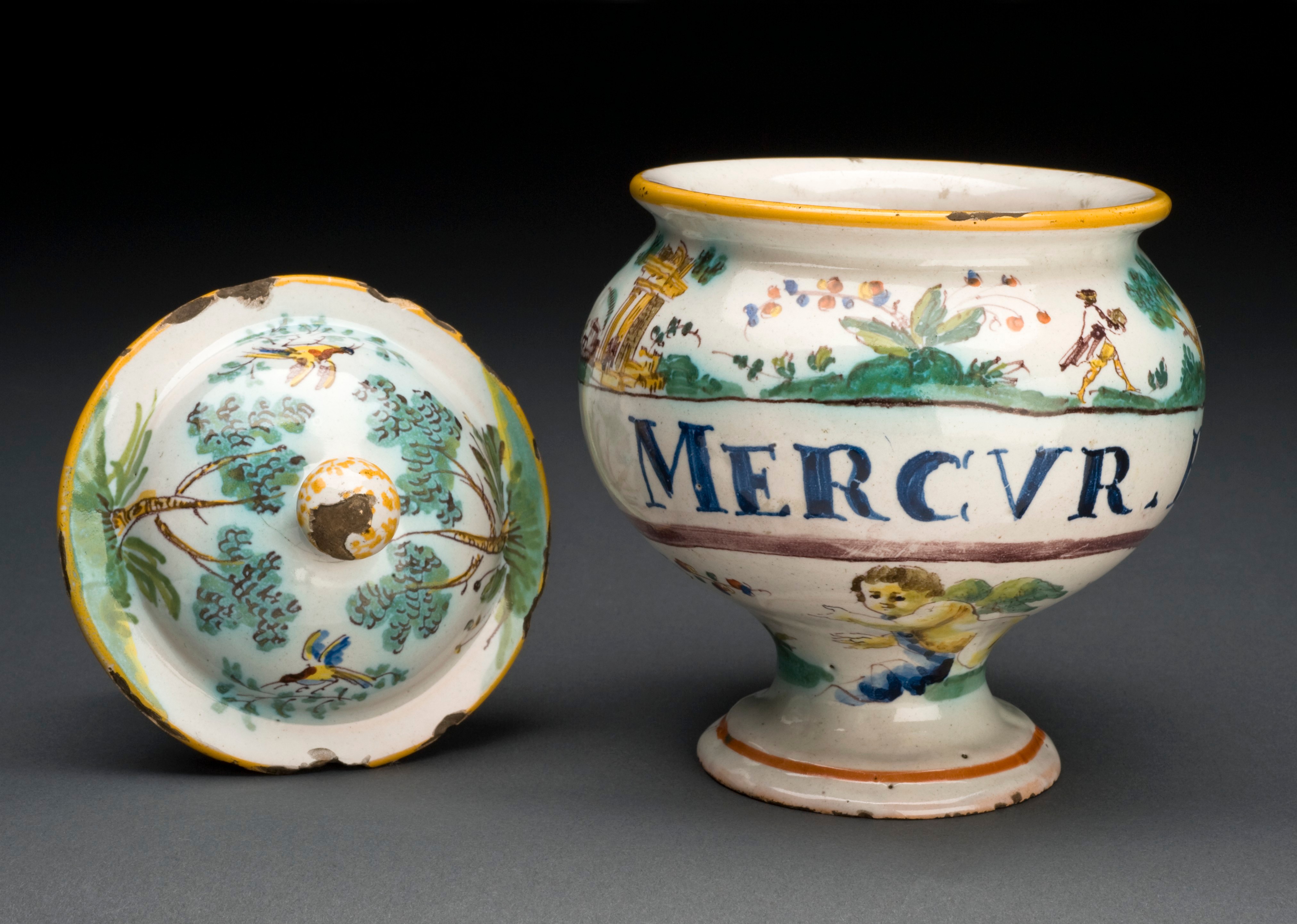
Mercury and guaiac, or guaiacum, were thought to be the best treatments for syphilis during the fifteenth and sixteenth centuries. Mercury had already been used as a topical treatment for skin conditions before the syphilis epidemic of the 1490s. It had already been used for centuries in China and the Middle East for the same purpose. It remained in vogue as a treatment for syphilis over the centuries and was thought to be the most effective option for much of this time by many medical practitioners, although this did not go unchallenged. Mercury would be utilised in ointments, fumigation treatments, pills and even sweets. Its unpleasant effects, however, would also drive people to seek out alternative remedies, such as herbal remedies.
The potentials dangers of mercury were realised by some quite early on. Chinese medical texts contained warnings that some remedies containing mercury might cause miscarriage. Paracelsus, the famous alchemist and astrologer, advocated the use of mercury as a treatment for syphilis to be given internally in carefully measured doses. The unpleasant effects of mercury poisoning could be difficult to tell apart from those of syphilis itself. As the centuries progressed, people became more concerned about the effects of large amounts of mercury on the body. They also eventually began to learn more about the effects of syphilis on the internal organs.

Guaiac, also known as Guaiacum, waxed and waned in popularity. Preparing the treatment consisted of grinding the wood down, boiling the powder and then feeding the patient the resulting concoction. This process made the room quite warm and thus caused the patient to sweat. The side effects were not as unpleasant as treatments involving mercury. Guaiac was recommended by the knight Ulrich von Hutten during the sixteenth century because of the problems associated with mercury. It was expensive; guaiac was introduced from the West Indies and the Fuggers, the most influential banking family in Europe, had a huge monopoly on its distribution during the sixteenth century. Many began to see mercury and guaiac were not the only treatments for syphilis; some employed herbal remedies and ‘vegetable cures’ became popular during the eighteenth century. Arsenic was also employed in the treatment of syphilis. In the early twentieth century Ehrlich’s ‘magic bullet’ for syphilis, Salvarsan 606, emerged. It was an arsenic compound that was like an early form of chemotherapy.
The vegetable ‘cures’ of the eighteenth century promised, like guaiac, a lack of unpleasant side effects associated with mercury based treatments and, being refined into products such as syrups, were easy to administer. A number of these vegetable ‘cures’ actually did contain small amounts of mercury. As with a variety of other readily available medications which claimed to do wonders for various illnesses, there was good money to be made. Many of these cures became quite widely available and fairly affordable, thus attracting a larger consumer base. Recipes for these ‘cures’ and other popular remedies, such as mercury pills, were closely guarded. Similar situations occurred with elixirs that it was claimed could cure melancholy and lots other conditions people were rather concerned about during the seventeenth and eighteenth centuries. Lawsuits sometimes broke out, even within families, as to who rightfully owned the original recipe of these popular remedies. Particularly successful brands of popular remedies, including mercury based treatments, persisted even into the nineteenth and twentieth centuries.

Congenital syphilis, syphilis passed from mother to child through the womb, could be puzzling. Seemingly healthy mothers could give birth to babies who developed rashes and ulcers. These would later disappear and so the child might appear cured. It was suggested that babies might be infected through their wet nurse. Deformities in babies in early modern Europe were thought to be caused by any number of things, perhaps something the mother saw whilst she was pregnant could cause a child to be born with certain features. Rembrandt’s portrait of his friend Gerard de Lairesse, painted in 1665, is today widely thought to depict a man who suffered from congenital syphilis. This is based largely on the appearance of his face as it appears in the portrait, particularly with regard to his nose. The fact that de Lairesse went blind has also been used to support the diagnosis. The diagnosis was made in 1913, when the effects of congenital syphilis were more fully understood. De Lairesse experienced some negative reactions towards his appearance from some of his contemporaries. He was himself an artist and showed great resilience; after going blind around 1690 he gave lectures on art theory.
Further Reading:
https://wellcomecollection.org/works/m3ttr8jp?query=ulric%20von%20hutten%20syphilis
https://wellcomecollection.org/works/juutsssc?query=durer%20syphilis
https://wellcomecollection.org/works/edzbqu78?query=syphilis%20fracastorius
https://wellcomecollection.org/works/nhjzetht?query=mercury%20pills
https://wellcomecollection.org/works/qw9dd5g5?query=straet%20syphilis
https://wellcomecollection.org/works/p6zhruvz?query=nose%20syphilis
https://www.ncbi.nlm.nih.gov/pmc/articles/PMC3413456/
https://www.ncbi.nlm.nih.gov/pmc/articles/PMC1079501/
https://quod.lib.umich.edu/e/eebo/A40375.0001.001?view=toc
http://notchesblog.com/2016/03/22/sores-scorn-and-stigma-suffering-syphilis-in-early-modern-germany/
https://www.rijksmuseum.nl/en/rijksstudio/artists/gerard-de-lairesse
http://europepmc.org/backend/ptpmcrender.fcgi?accid=PMC1194440&blobtype=pdf
Peter Lewis Allen, The Wages of Sin: Sex and Disease, Past and Present (London, 2000).
Catherine Arnold, City of Sin: London and Its Vices (London, 2010).
Lawrence I. Conrad, Michael Neve, Vivian Nutton, Roy Porter, Andrew Wear, The Western Medical Tradition 800 BC to AD 1800 (Cambridge, 2003).
Hugh Crone, Paracelsus: The Man Who Defied Medicine (Melbourne, 2004).
Barbara J. Dunlap, ‘The Problem of Syphilitic Children in Eighteenth-Century France and England’, in Linda Evi Merians (ed.), The Secret Malady: Venereal Disease in Eighteenth-century Britain and France (Kentucky, 1996), p. 114- 127.
John Frith, ‘Syphilis- Its Early History and Treatment until Penicillin and the Debate on its Origins’, Journal of Military and Veteran’s Health 20:4
Fred D. Gray, The Tuskegee Syphilis Study: The Real Story and Beyond (Montgomery, 2013).
James H. Jones, Bad Blood: The Tuskegee Syphilis Study (New York, 1993).
Fiona Haslam, From Hogarth to Rowlandson: Medicine in Art in Eighteenth Century Britain: (Liverpool, 1996).
Debora Hayden, Pox: Genius, Madness and the Mysteries of Syphilis (New York, 2003).
Darin Hayton, ‘Joseph Grünpeck’s Astrological Explanation of the French Disease’ in Kevin Siena (ed.), Sins of the Flesh: Responding to Sexual Disease in Early Modern Europe (Toronto, 2005), pp. 81-109.
N.F. Lowe, ‘The Meaning of Venereal Disease in Hogarth’s Graphic Art’, in Linda Evi Merians (ed.), The Secret Malady: Venereal Disease in Eighteenth-century Britain and France (Kentucky, 1996), pp. 168-182.
Marie E. McAllister, ‘John Burrows and the Vegetable Wars’, in Linda Evi Merians (ed.), The Secret Malady: Venereal Disease in Eighteenth-century Britain and France (Kentucky, 1996), pp. 85-102.
Linda E. Merians, ‘The London Lock Hospital and the Lock Asylum for Women’, in Linda Evi Merians (ed.), The Secret Malady: Venereal Disease in Eighteenth-century Britain and France (Kentucky, 1996), pp. 128-148.
Kathryn Norberg, ‘The Body of the Prostitute: Medieval to Modern’, in Sarah Toulalan and Kate Fisher (eds.), The Routledge History of Sex and the Body: from 1500 to the Present (London, 2013), pp.393-407.
J.D. Oriel, The Scars of Venus: A History of Venereology (London, 1994).
Monika Pietrzak-Franger, Syphilis in Victorian Literature and Culture: Medicine, Knowledge and the Spectacle of Victorian Invisibility (Hamburg, 2017).
Gabriel A. Rieger, Sex and Satiric Tragedy in Early Modern England: Penetrating Wit (Farnham, 2009).
Claudia Stein. Negotiating the French Pox in Early Modern Germany (Warwick, 2009).
Richard M. Swiderski, Quicksilver: A History of the Use, Lore and Effects of Mercury (Jefferson, 2008).
Perry Treadwell, God’s Judgement? Syphilis and AIDS: Comparing the History and Prevention Attempts of Two Epidemics (New York, 2003).
Judith R. Walkowitz, Prostitution and Victorian Society: Women, Class and the State (Cambridge, 2001).
Philip K. Wilson, Surgery, Skin and Syphilis: Daniel Turner’s London (1667-1741), (Amsterdam, 1999).
Philip K. Wilson, ‘Exposing the Secret Disease: Recognising and Treating Syphilis in Daniel Turner’s London’ in Linda Evi Merians (ed.), The Secret Malady: Venereal Disease in Eighteenth-century Britain and France (Kentucky, 1996), pp. 68-84.
 A Place Between The Trees
One thought on “Art, Health and History: The Great Pox. Part Two: Early Modern Origin Theories”