
The custom of the Christmas tree is a borrowed one. Find out how the Christmas tree was first introduced to Britain, what kind of decorations were used on Christmas trees in centuries past and take a look at our Christmas tree and tree decorations.

It’s not Christmas without a Christmas tree, right? The history of the Christmas tree in Britain is actually quite a short one. It’s a tradition that is said to have been introduced first by Queen Charlotte, although a yew tree was used rather than the fir trees we are now used to. Queen Charlotte’s tree in the year 1800 was decorated with almonds, fruits, paper, sweetmeats and toys.[1] ‘Sweetmeats’ is quite an archaic term now, one used in the past to refer foods prepared with sugar or honey. This included fruits that had been candied or covered in honey or syrups.
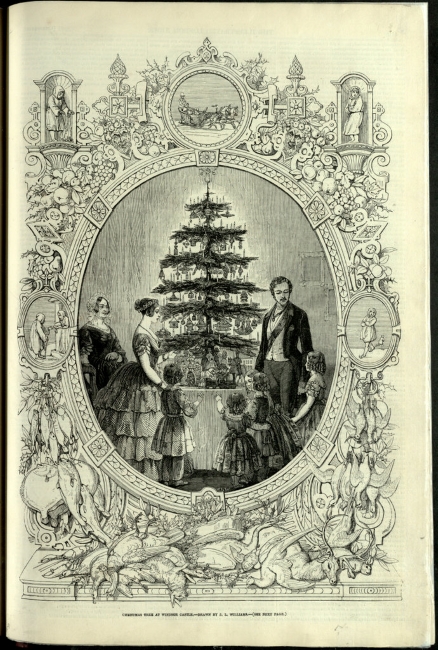
We owe the popularisation of the custom of the Christmas tree to Queen Victoria and Prince Albert, who appeared gathered around a Christmas tree with their some of children in an illustration by J.L. Williams (1815-1877) in a supplement to the Illustrated London News in 1848.
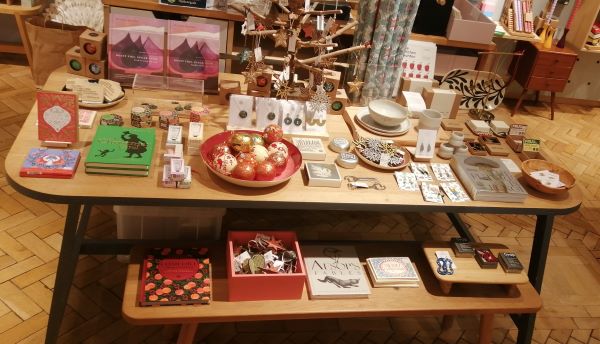
According to Joe Perry in his book Christmas in Germany: A Cultural History, the Christmas tree as an essential part of German Christmas traditions emerged during from various customs, one of which was to decorate the house with winter flora during the early modern period.[2] Similar customs for decorating the house with evergreens, such as holly and ivy, had existed in early modern England but had not included the use of a tree. At some point, claims even started to emerge that Martin Luther himself had invented the custom of the Christmas tree.[3] Perry notes that a chronicle from Strasbourg, dating back to 1604, is the oldest written record of the use of a Christmas tree in German-speaking areas.[4] The chronicle describes the use of roses made from paper and the use of foods, such as apples, sweetmeats and wafers, to decorate the tree, as well as tinsel.[5] Some of Queen Charlotte’s tree decorations in 1800 were clearly in keeping with the decorations used for Christmas trees in the early 17th century.
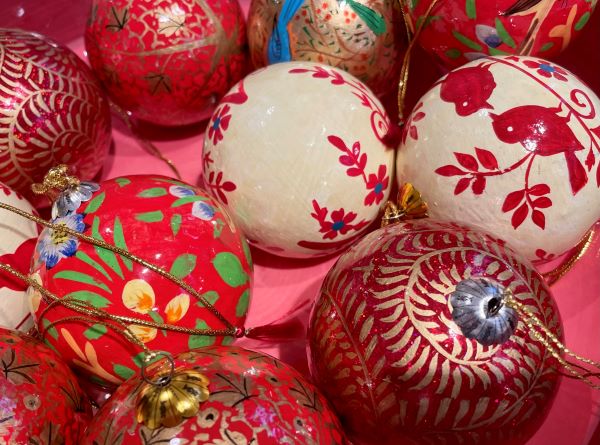
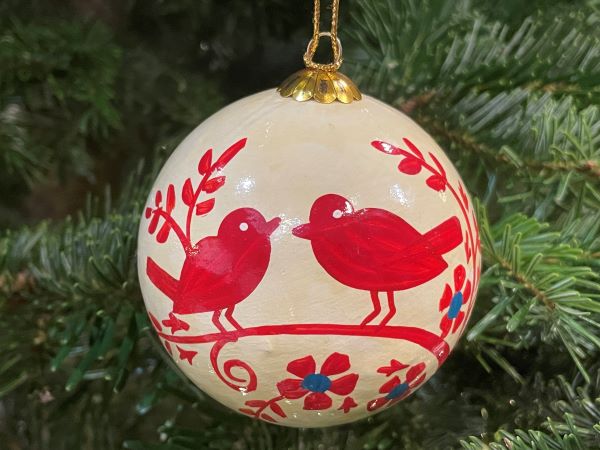
The materials and techniques we use to create decorations (and even our Christmas trees) may have changed and expanded over time but the Christmas tree has become a beloved aspect of a British Christmas (and Christmas celebrations in other countries, too.) It’s certainly an important aspect of how we celebrate Christmas at the Whitworth. Each year we eagerly await the arrival of the Whitworth’s Christmas tree at the Oxford Road entrance, where it takes center-stage.
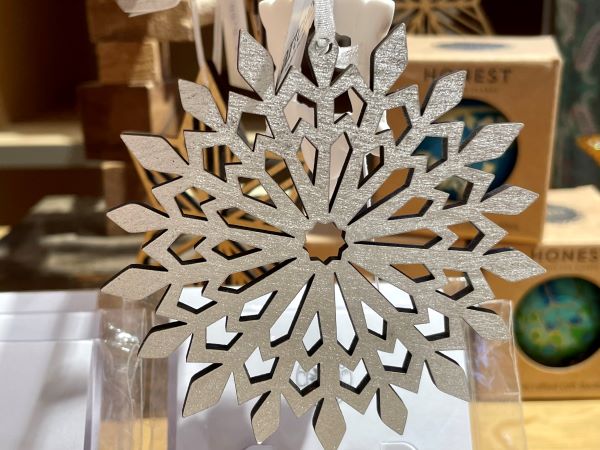
The job of decorating our tree is usually undertaken by the Whitworth Shop team. In no time at all, they deck the tree out in beautiful decorations- and the best part is, the decorations are available to purchase for your own Christmas tree! If you can’t get down to the shop in person, you can purchase some of their lovely tree decorations online.

I have a growing collection of their tree decorations at home, which reminds me; I have a tree to put up. I hope the fairy lights aren’t too tangled this year. Wish me luck!
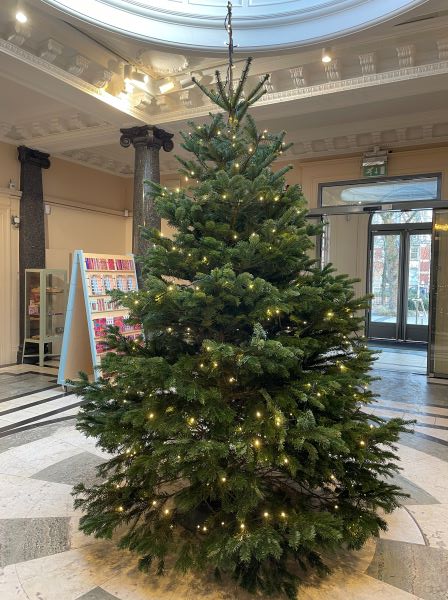

And now, without further ado, the Whitworth’s Christmas tree for 2023:

I especially like the origami stars and paper chains our shop team took the time to make.
Do you have any particular colour scheme or theme in mind for your Christmas tree? Do you put a Christmas tree up or do you have another winter tradition you’d like to share? Let us know in the comments!
– Steph
References
[1] Annie Gray, At Christmas We Feast: Festive Food Through the Ages (London, 2021), pp.105-105.
[2] Joe Perry, Christmas in Germany: A Cultural History, (University of North Carolina Press, 2010), pp.31-32.
[3] Perry, Christmas in Germany: A Cultural History, (University of North Carolina Press, 2010), p.32.
[4] Perry, Christmas in Germany: A Cultural History, (University of North Carolina Press, 2010), p.32.
[5] Perry, Christmas in Germany: A Cultural History, (University of North Carolina Press, 2010), p.32.
Resources
British Library: ‘Christmas Tree at Windsor Castle’. Supplement to the Illustrated London News, December 1848.
English Heritage: A Short History of Christmas Greenery
Royal Collection Trust: A Royal Christmas
Annie Gray, At Christmas We Feast: Festive Food Through the Ages (London, 2021).
Joe Perry, Christmas in Germany: A Cultural History, (University of North Carolina Press, 2010).
Alison Weir and Siobhan Clarke, A Tudor Christmas, (London, 2018).
 A Place Between The Trees