
Learn about Talith’s inspiration for her Christmas decorations this year…
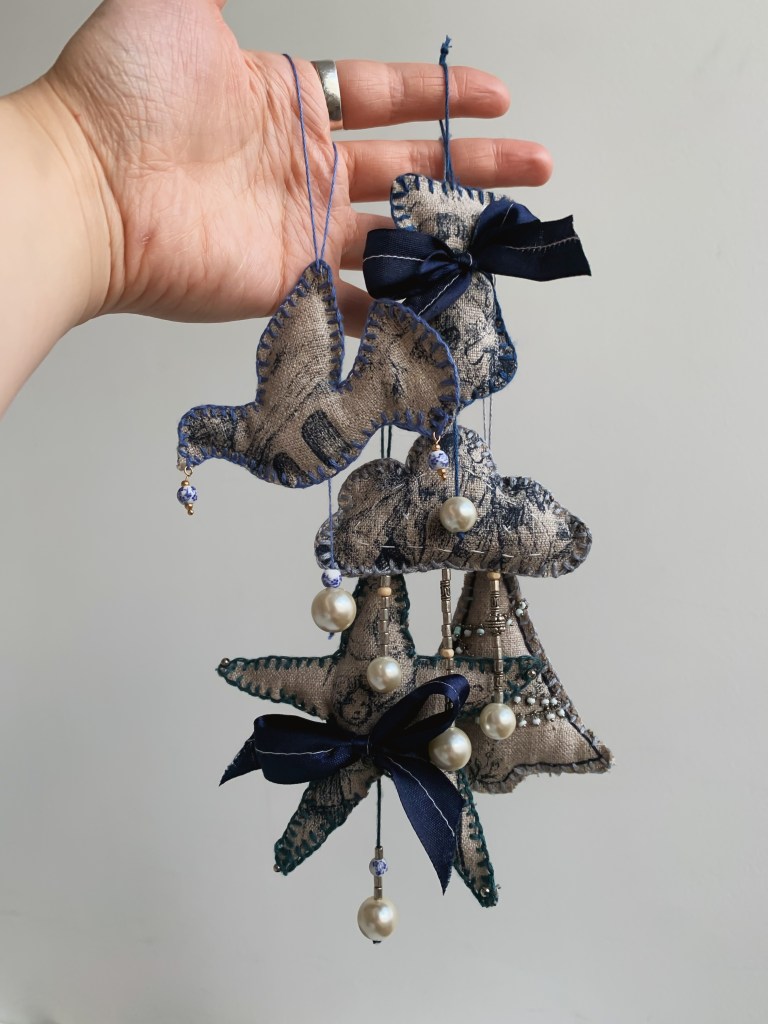
One of my favourite things about Christmas is the festive decorations. Whether it’s making my own wrapping paper or complimenting my space with gentle festive touches, being able to create beautiful things for myself and others is something that brings me so much joy!
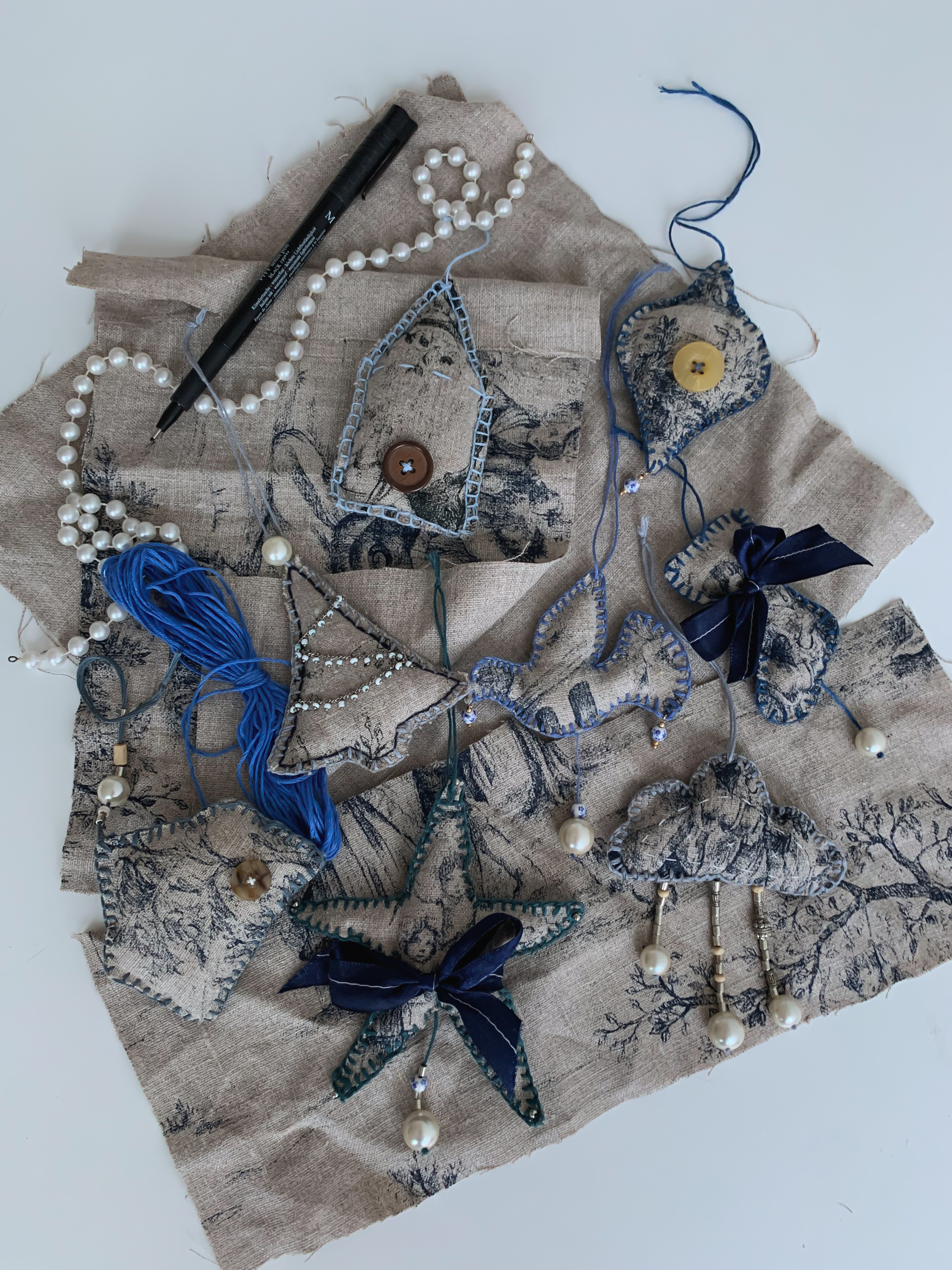
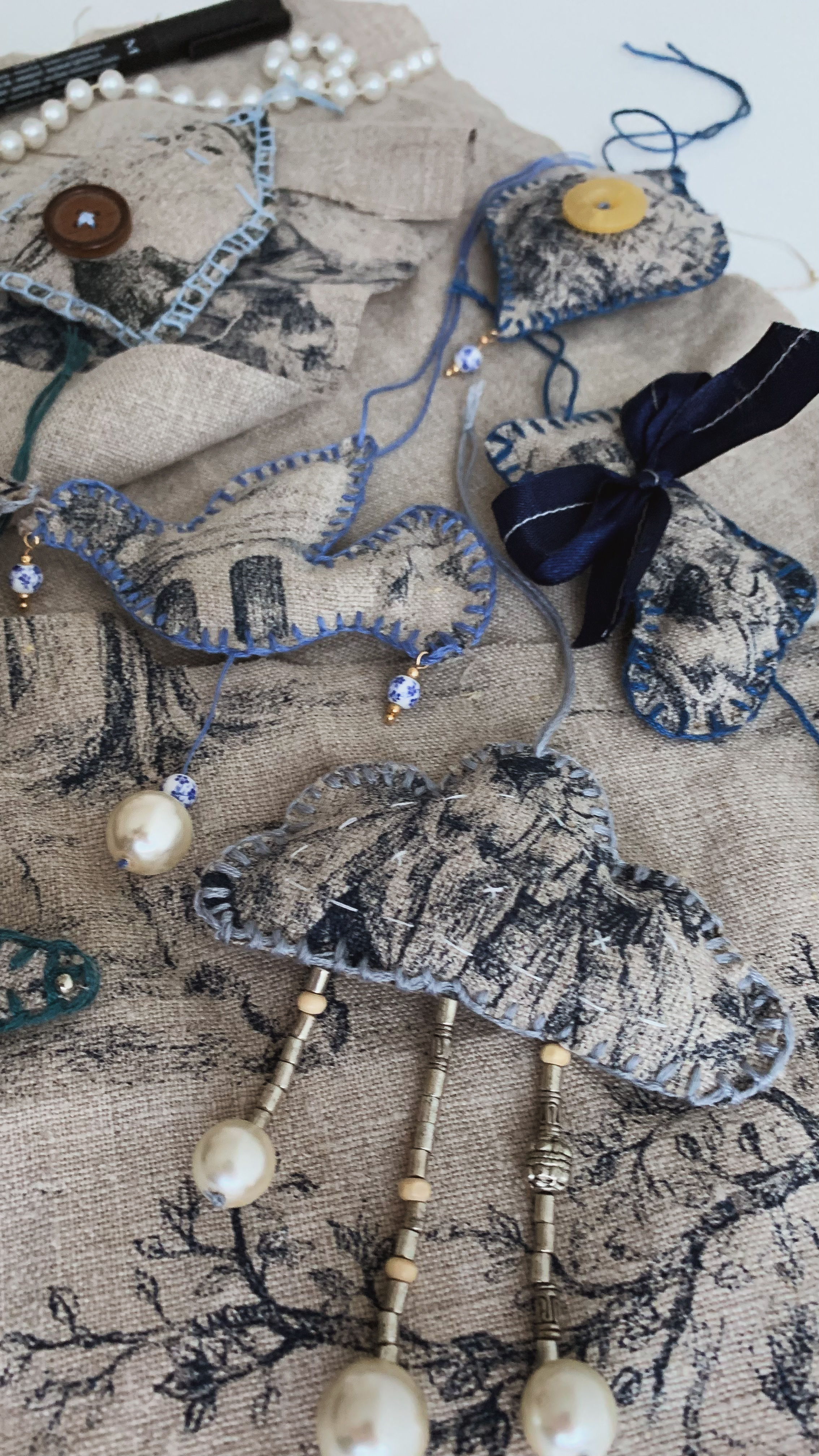
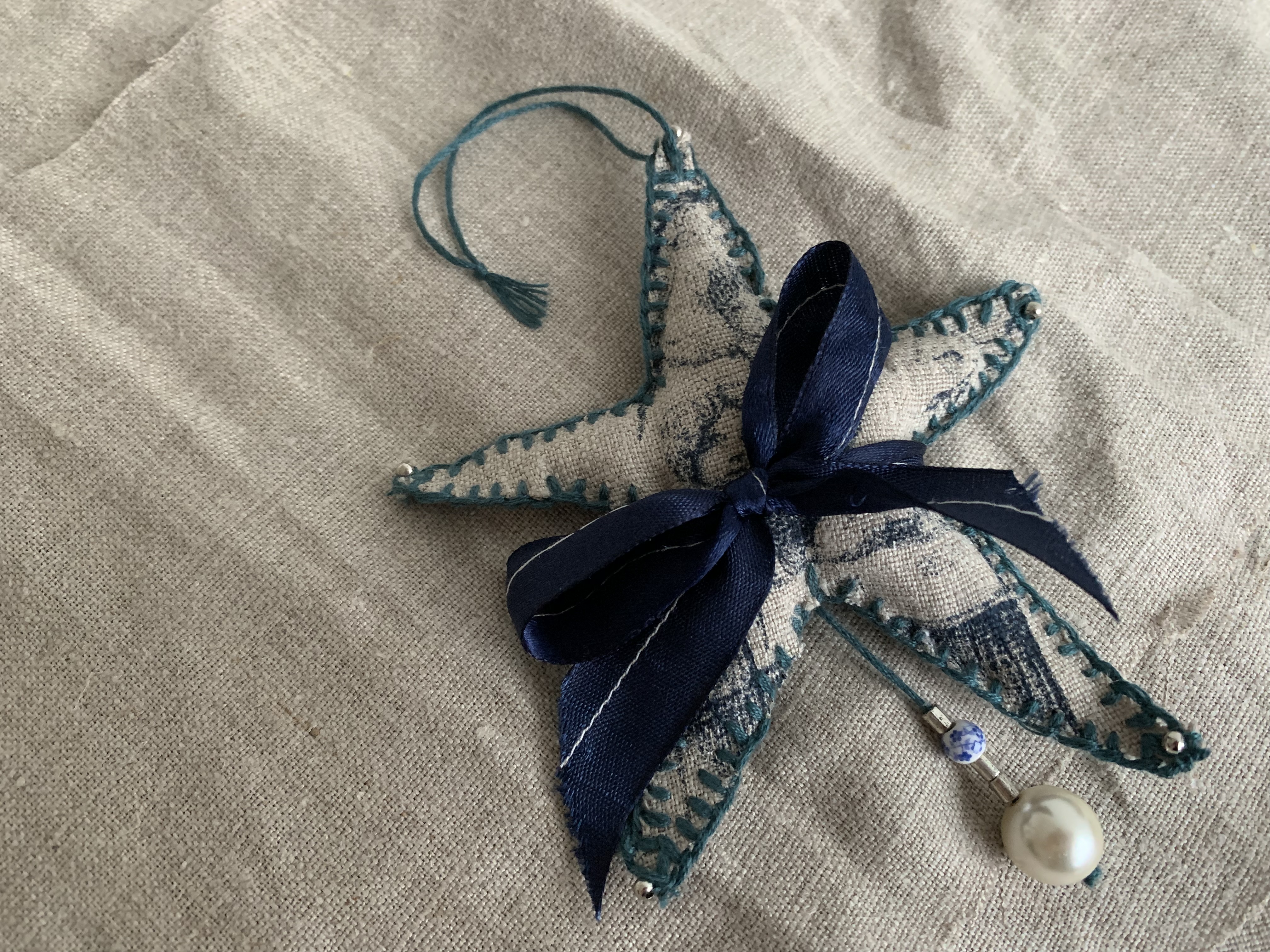
What has now evolved into a bit of a tradition for me is crafting a decoration for my Christmas tree that I think best represents my year. With this year being my first at the Whitworth, I wanted to pay homage to this exciting milestone, and so for my 2024 Christmas decoration I’m taking my inspiration from the Whitworth’s collection of textiles – specifically Toile de Jouy.
Literally translates to “cloth from Jouy”, Toile de Jouy (pronounced twahl-duh-zhwee) is a decorative pattern used in textiles and wallpaper. Often depicting romantic imagery, soft pastoral landscapes and symbolic floral compositions which reflected the tastes of the wealthy middle and upper classes of the 18th century. This whimsical design was considered to be almost like a newspaper or a diary of the times.
Although often referred to as ‘French Toile’, the design and printing method originates from 16th century India. Indian ‘Chintz’ fabrics were woodblock printed, painted, stained or glazed calico textiles that were often printed with floral designs typically on a light, plain background. Both the Dutch East India Company and British East India Company started importing Indian Chintz fabrics in the early 17th century. In 1752 an Irish businessman named Francis Nixon further developed the printing method by swapping out the slow and limited woodblock method with the copperplate method that allowed for more detail, bigger prints and only one colour. The print style was later named ‘Toile de Jouy’ by a German industrialist who had set up a textile factory in France. The printed textile quickly became popular across the country when the German-born Christophe-Philipe Oberkampf opened his factory in Jouy-en-Josas in 1760. It was here where Oberkampf’s chic and sophisticated designs caught the eye of style-setters Madame de Pompadour and Marie Antoinette.
At the Whitworth, we currently exhibiting Barbara Walker: Being Here, an outstanding exhibition. Within the installation, there is a Toile de Jouy inspired wallpaper designed by Barbara Walker herself!
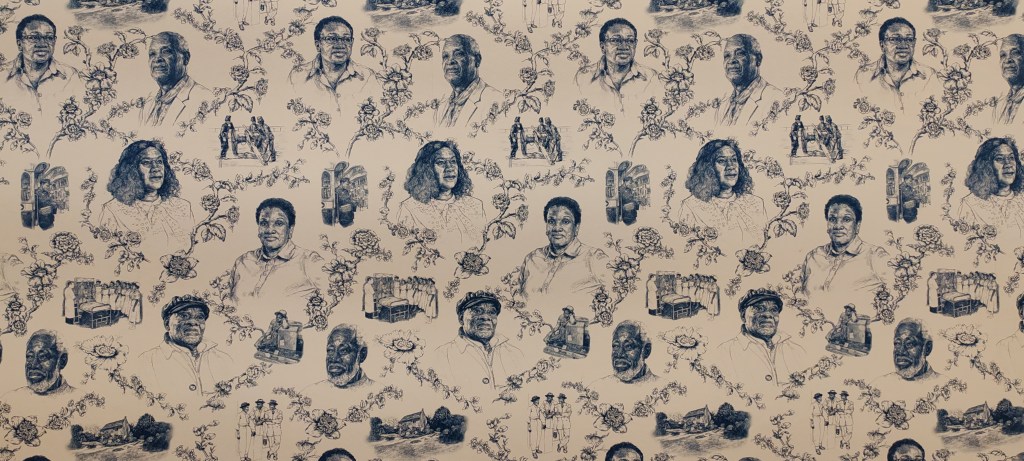
In her wallpaper commission ‘Soft Power’, Walker reclaims the historical soft power of Toile through countering the design’s conventional imagery of European figures with Caribbean diaspora, celebrating six first and second-generation Windrush migrants from Manchester.
From sensitively paying homage to both The Whitworth’s textile history and Caribbean heritage in Britain, to countering Toile’s conventional European imagery with Caribbean diaspora, I really enjoy the depth of Soft Power and how thoughtfully considered the piece is.
Barbara Walker: Being Here will be open until Sunday 26th January 2025.
For more information follow the link below:
https://www.whitworth.manchester.ac.uk/whats-on/exhibitions/upcomingexhibitions/barbarawalker/
Below are instructions for making your own Christmas decorations with leftover craft materials.
Materials required:
- Scrap fabric
- Scissors
- Pen
- Needle
- Thread or embroidery floss
- Cotton wool
- Various beads, buttons and ribbon from around the home.
Method
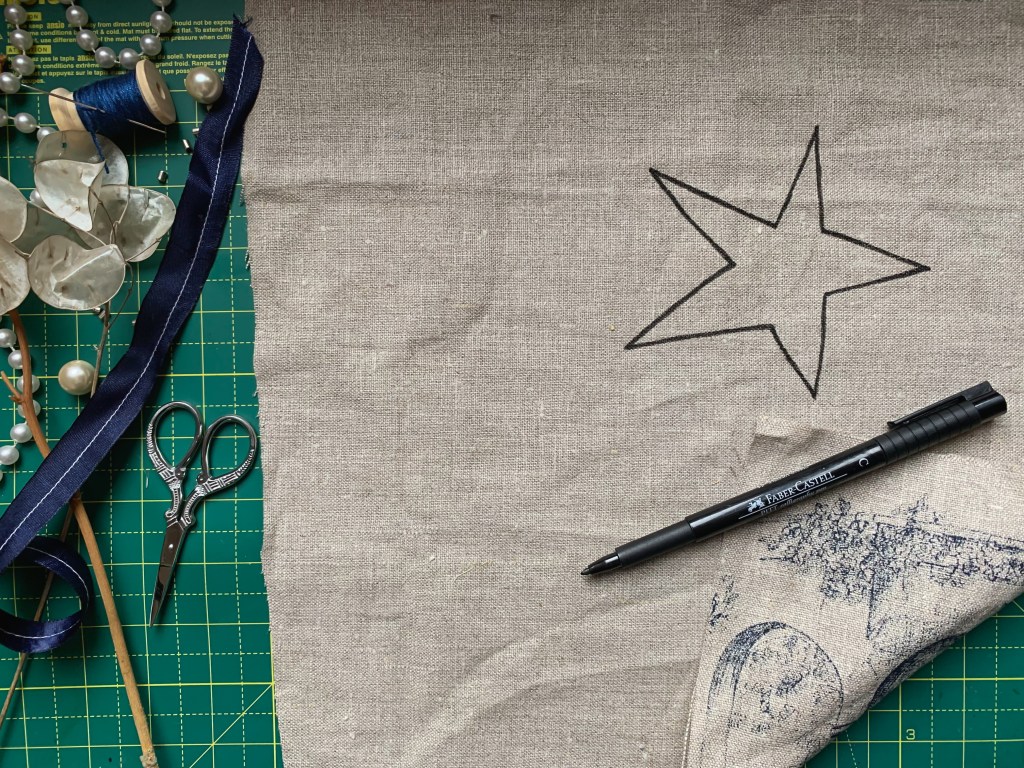
Step 1: Using a pen, draw your desired shape onto the reverse side of your fabric.
Step 2: Cut out the shape you have drawn.
Step 3: Place the shape on another area of your fabric, carefully draw around the shape again and then cut this second shape out.

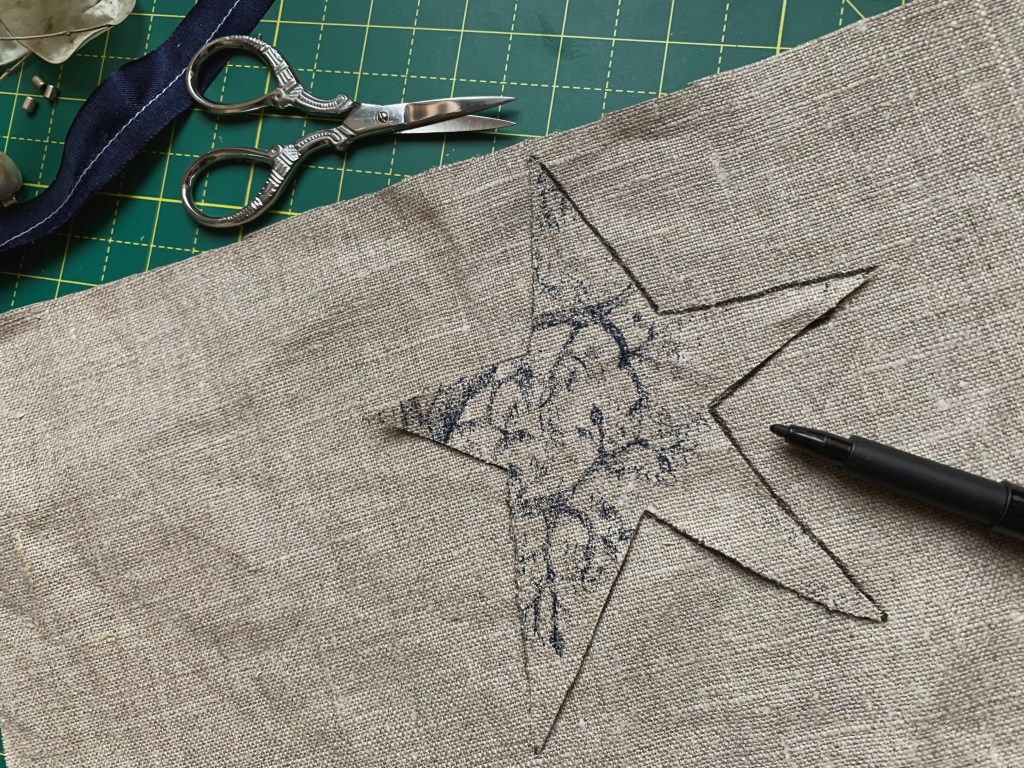
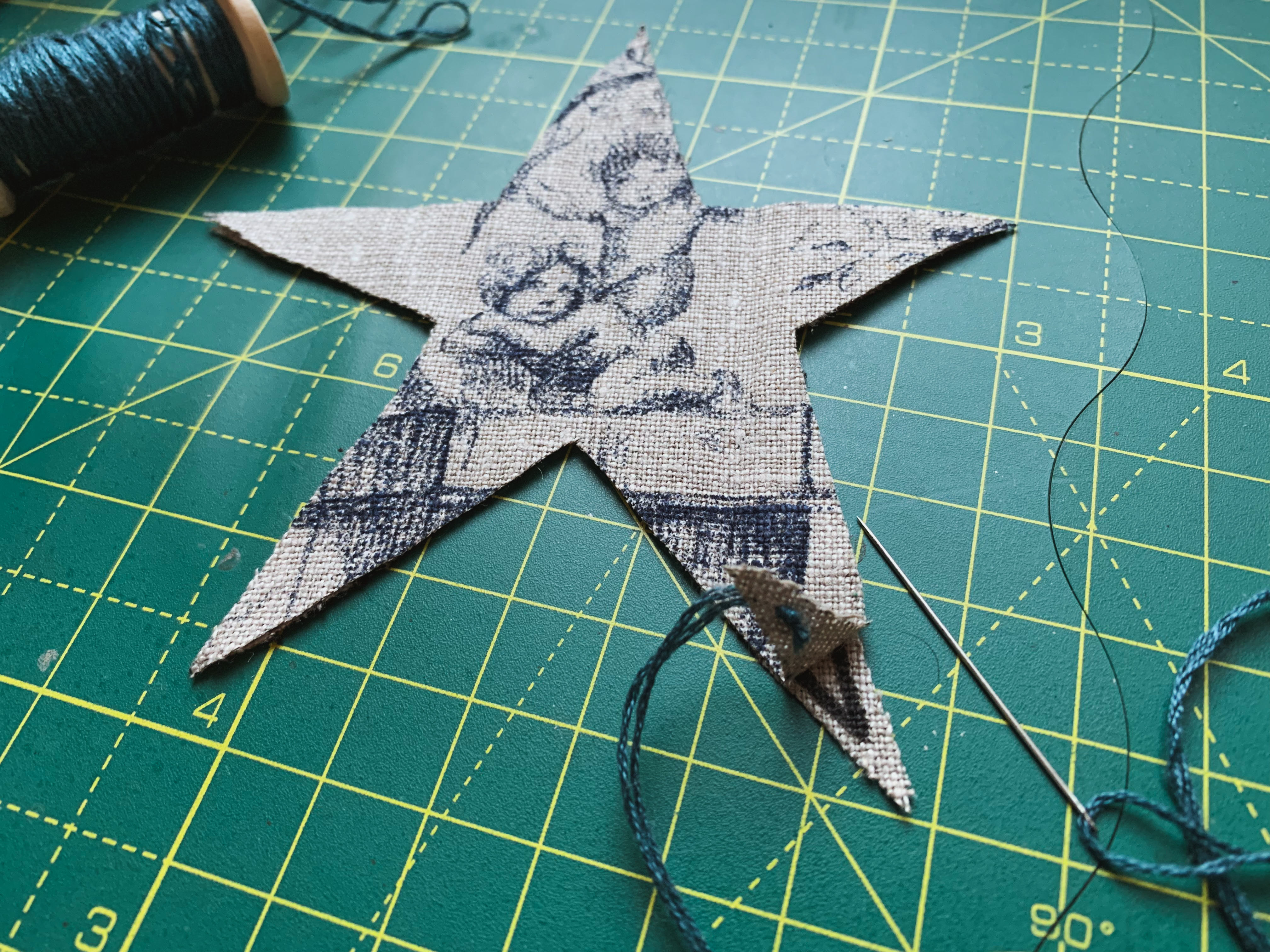
Step 4: Place the fabric pieces together with the patterned sides facing outwards.
(Tip: hairspray is a great alternative to an adhesive that will temporarily hold your fabric pieces together as you’re sewing! Spray the hairspray sparingly across the fabric pieces before placing them on top of each other.)
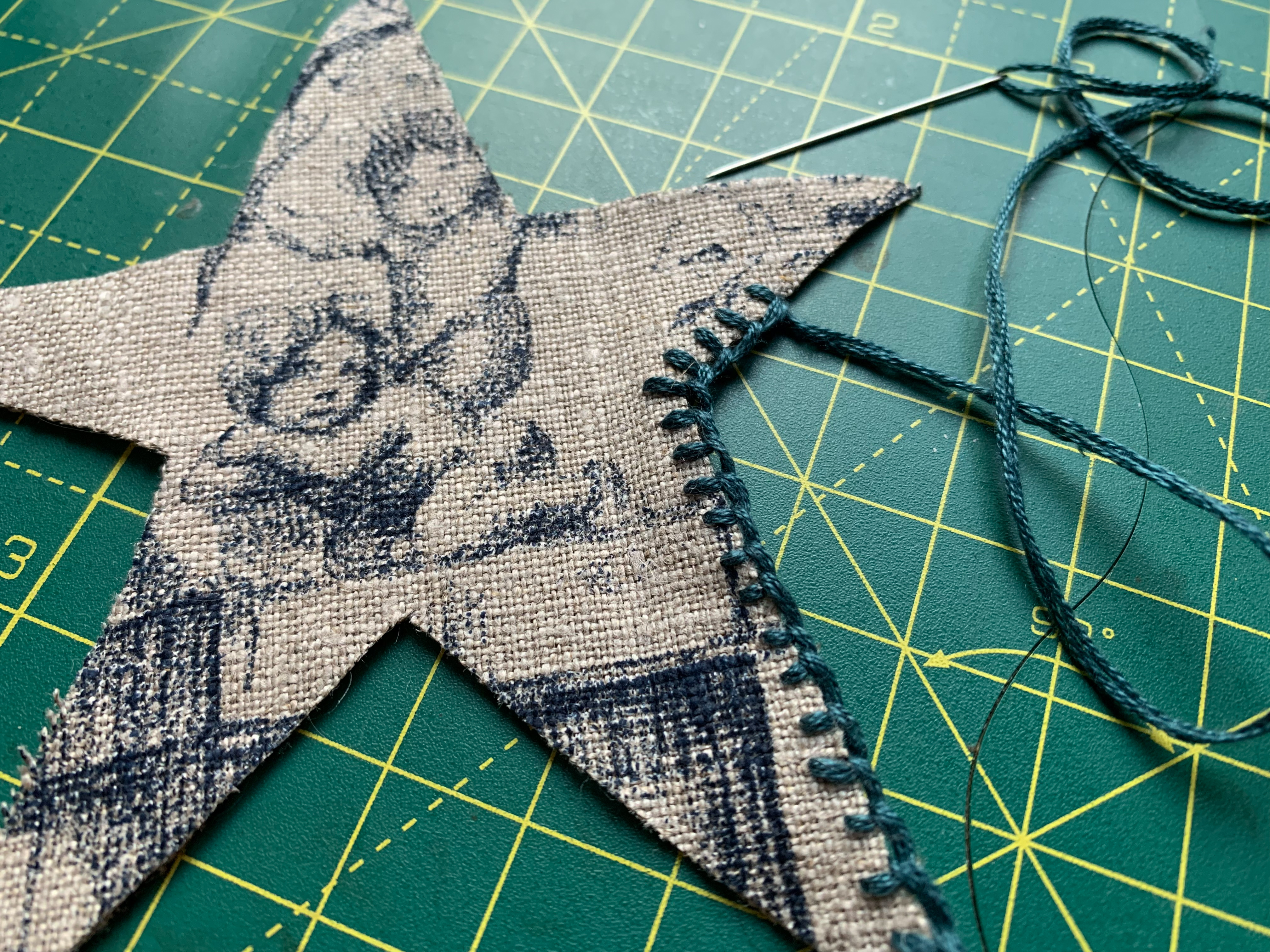
Thread your needle and knot the tail end. Start by sending your needle up from inside the two shapes. At this point, you can either do a running stitch or a blanket stitch.
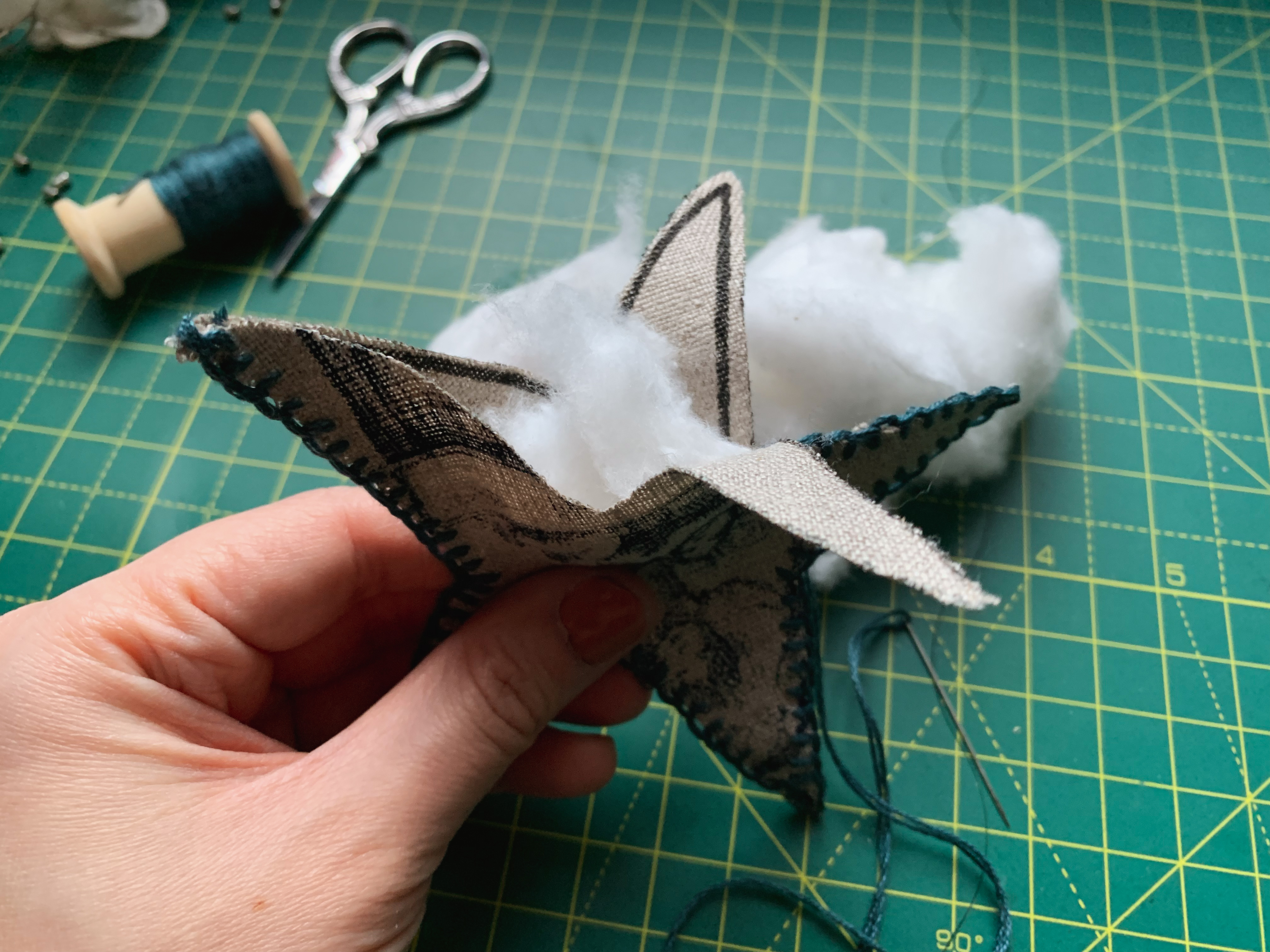
Step 5: Once the ornament is mostly sewn together, gently stuff with the cotton wool filling. Use a pencil or pointed object to help push the corners or points out if necessary and then sew closed.
(Tip: try adding dried petals or lavender into the filling to make it scented.)
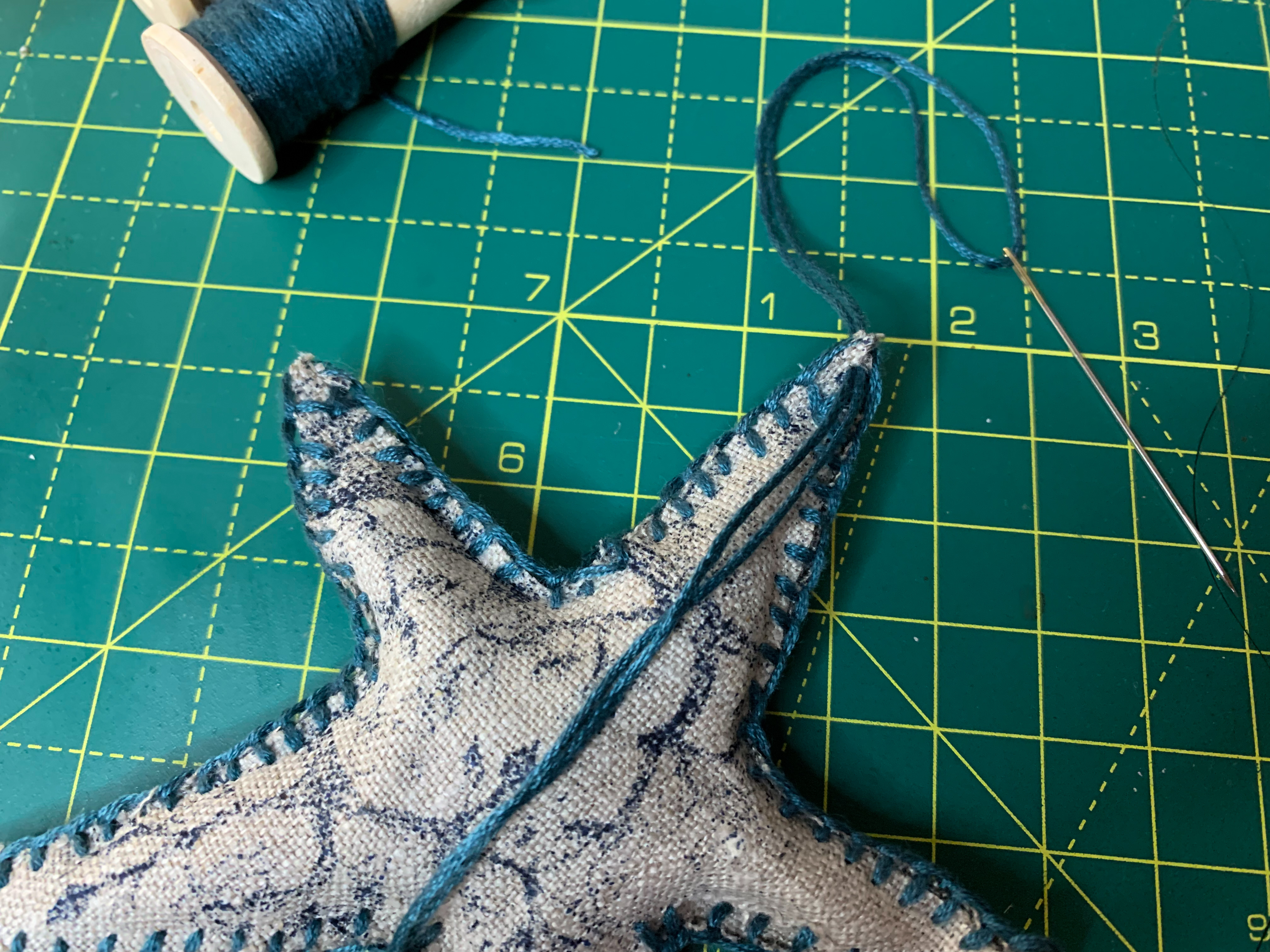
Step 6: To add a hanging loop, thread your needle again and feed through the top of the ornament. Cut the thread to your desired length and tie the threads together.
Step 7: Finally, add a ribbon and stitch the various beads and buttons onto your ornament.
Thank you for reading, and have a wonderful Christmas!
– Talith
 A Place Between The Trees