
Join Lily as she as she introduces you to a winter solstice family tradition.
It’s at this time of year, as the dark nights settle, that we can feel a separation from the outside world. We start to slow down, and signs of life cease. But it is also at this time of year, in many cultures, that midwinter festivals are held to brighten the darker days.
Throughout my childhood, celebrating the winter solstice was part of our yearly routine. We would mark the longest night with the ritual of bringing greenery into our home. I remember, armed with a pair of kitchen scissors, heading out into the garden to see what treasures lay waiting. The bright colour of the evergreen plants would always stand out against the backdrop of grey. We would gather as much as we could, bringing it inside to decorate with. Placing these bundles of green anywhere and everywhere. They would serve as a reminder of the spring to come and the continuation of life.
In centuries past, evergreens were used during winter solstice celebrations to ward off evil spirits and mark new growth to come. For Christians, evergreens symbolised the promise of new life returning in the spring.
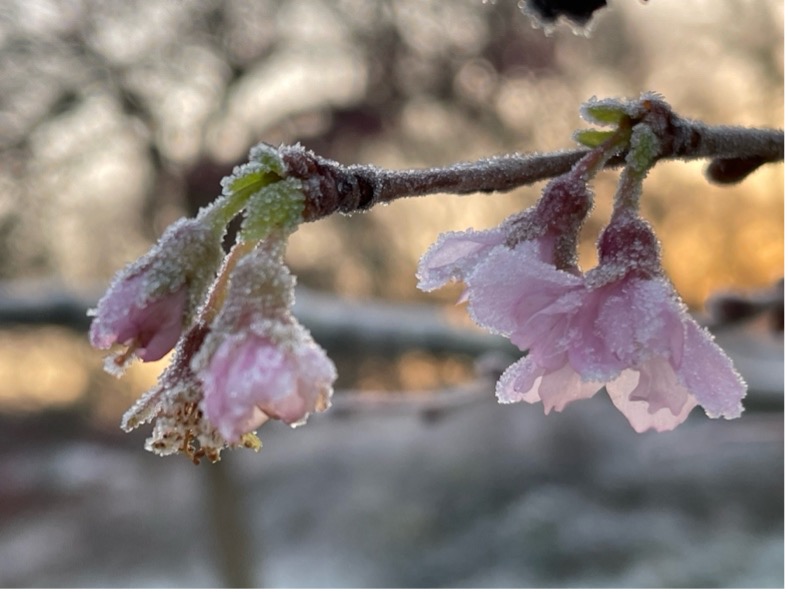
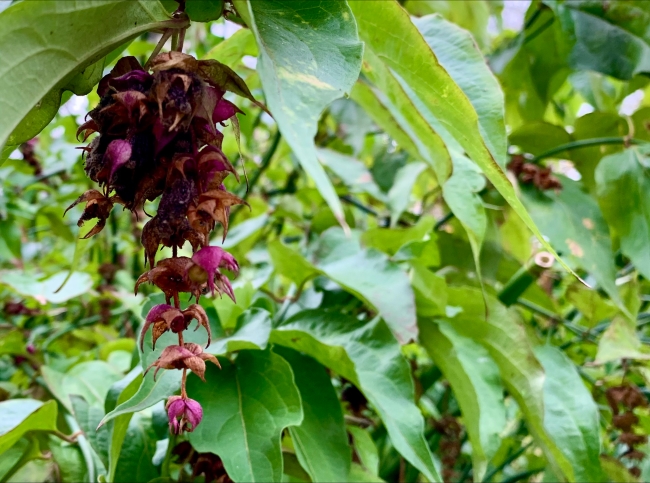
While holly, ivy, and mistletoe might be some of the more famous foliage talked about at this time of year, I’d like to bring your attention to the Leycesteria formosa, Himalayan honeysuckle, which has self-seeded in The Whitworth’s Art Garden. Although the garden was formally designed without any winter flowers, this honeysuckle has found a way of injecting itself into the garden. It’s a pleasant sight with its red berries that will stay throughout the winter, the flowers emerge in autumn and are followed by berries which turn a purplish-black colour. The fruit is edible and tastes of chocolate, although don’t take my word for it, the birds get them first. The Community Garden is home to a Prunus Autamalis, to you and me, that’s a winter flowering cherry. Cherry blossom is a rare but welcome sight in winter. I love that blossom can be seen at this time of year. On a cold, crisp day I’d recommend a stroll through our gardens.
Bringing evergreens into the home is a way for me to connect with nature; it’s a way to mark the change in the seasons. The circle continues, plants will grow and fruit again, and life will return in the seasons to come. But this act of welcoming new life doesn’t only have to be with fresh greenery, it can, of course, be in the form of art.
Wallpaper is one way people could bring elements of nature into their homes and the Whitworth’s collection houses many. Originating in the 16th century, the popularity of wallpaper grew and grew until by the beginning of the 20th century, people were putting it everywhere. Although it would be rude not to mentioned William Morris when talking about textiles and wallpaper, perhaps the thing he is most famous for, there is a lesser known, equally talented designer of textiles and wallpaper, Charles Francis Annesley Voysey, whose work beautifully stylises natural forms, especially plants and birds.

‘Have nothing in your houses that you do not know to be useful or believe to be beautiful.’ – William Morris
Both Morris and Voysey drew inspiration from nature. Morris famously based his designs on the everyday birds and plants you would find in a British garden, rather than exotic or tropical foliage which was also popular at the time. This meant his motifs spoke to people, they were recognisable and relatable. By the mid-1890s, Voysey was creating his most characteristic and original designs, flowing patterns in pastel colours with flattened silhouettes of birds, florals, and hearts.
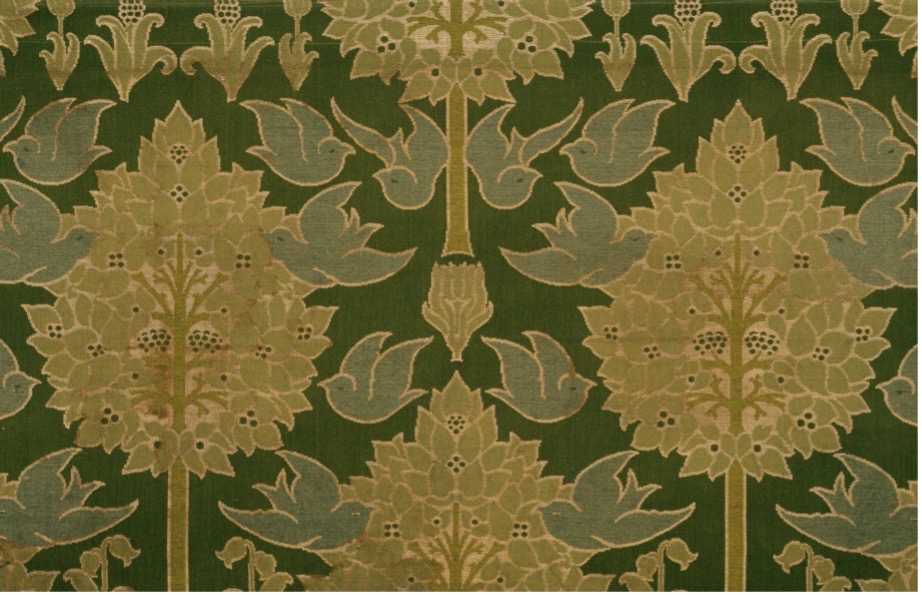
Charles Francis Annesley Voysey (designer) (1857-1941) for Alexander Morton and Co Ltd (1867-1914), Wool and cotton tissue, c.1899. Accession number: T.11820
At this time of year, so heavily laden with traditions, will you bring a symbol of new life into your yearly routine?
– Lily
Do you want to see other posts from our Whitworth Advent calendar? Click here.
 A Place Between The Trees